
INTRODUCTION TO THE GRAPHIC
DESIGN PROGRAM
The Graphic Design Program at
Isparta University of Applied Sciences provides graduates with the creative,
technical, and visual communication skills to quickly adapt to roles in
advertising agencies, printing houses, social media, digital media, and corporate
design departments. The program covers theoretical and practical knowledge in
the fundamental principles of graphic design, digital design programs,
typography, brand identity, and visual communication.
PROGRAM EDUCATIONAL OBJECTIVE
PO1: Providing a solid foundation
in theoretical knowledge within the field of graphic design, enabling students
to create effective and aesthetic designs across various mediums through
practical training in areas such as typography, illustration, photography,
design processes, and printing techniques.
PO2: Encouraging creative
thinking processes by developing students’ analytical and critical thinking
skills, which are essential for producing original and innovative visual
communication solutions.
PO3: Equipping students with the
ability to effectively use contemporary technologies, software, and tools
related to the digital aspects of graphic design, while fostering proficiency
in areas such as digital media, interactive design, and animation.
PO4: Enhancing the ability to
integrate aesthetic sensitivity with functionality in visual communication
design, enabling students to create designs that prioritize both creativity and
user experience.
PO5: Adopting an
interdisciplinary approach by integrating knowledge from fields such as
advertising, media, cultural studies, and marketing, allowing students to
develop graphic design projects relevant to these domains.
PO6: Promoting a profound
understanding of local and global cultural values as well as art history,
enabling students to creatively incorporate historical references into
contemporary graphic design projects.
PO7: Instilling ethical
principles and professional responsibility in the field of graphic design,
fostering a sense of social awareness and a commitment to contributing to
societal development through visual communication work.
PO8: Through an intensive
hands-on training process, ensuring that students acquire competencies in time
management, process planning, and effective resource utilization for design
projects.
PO9: Encouraging a habit of
lifelong learning in the field of graphic design, supporting students in
staying updated with industry advancements and producing innovative ideas.
PO10: Enabling students to
explore a wide range of design practices, such as visual storytelling, brand
design, infographic development, and exhibition design, ultimately preparing
them with the skills and knowledge to contribute meaningfully to the industry
and academic studies.
GRAPHIC DESIGN PROGRAM
OBJECTIVES
1: To provide students with
fundamental theoretical knowledge in the field of graphic design, and to enable
them to create effective and aesthetically pleasing designs in various media
through practical work in areas such as typography, illustration, photography,
design processes, and printing techniques.
2: By encouraging creative
thinking processes, to develop the analytical and critical thinking skills
necessary for students to produce original and innovative visual communication
solutions.
3: To equip students with the
ability to effectively use current technologies, software, and tools related to
the digital aspects of graphic design, and to support them in developing
competencies in areas such as digital media, interaction design, and animation.
4: To develop the ability to
combine aesthetic sensitivity with functionality in visual communication
design, and to gain the capacity to create functional and creative designs
while considering user experience.
5: To enable students to produce
graphic design projects related to fields such as advertising, media, cultural
studies, and marketing by integrating knowledge from different areas with an
interdisciplinary approach.
6: To enable students to
creatively use historical references in contemporary graphic design projects by
developing a deep understanding of local and global cultural values and art
history.
7: To instill ethical principles
and a sense of professional responsibility in the field of graphic design, and
to reinforce the understanding of considering social awareness and societal
contribution in visual communication works.
8: To ensure that students gain
competence in time management, process planning, and effective resource
utilization in design projects through an intensive hands-on training process.
9: To encourage a habit of
continuous learning in the field of graphic design, and to support students in
generating innovative ideas by following developments in the industry.
10: To enable students to
experience a wide range of design practices such as visual storytelling, brand
design, infographic development, and exhibition design, thereby reaching a
level of knowledge and skills that can contribute to daily life and allow them
to explore diverse design applications in both industry and academia.
PROGRAM MISSION
The mission of the Graphic Design
Department is to ensure continuity in the field of Visual Arts by providing
knowledge and skills. It also trains graphic designer candidates who can
communicate with the current structure of the world and ensures that they are
trained as skilled, good designers and graphic artists who can develop their
own talents.
PROGRAM VISION
Our aim is to be an exemplary
program that leads the way for the graphic design perspective to find its
meaning in society, as sought by international standards. In this direction,
students who are aware of their responsibilities, have the power to dream, and
are talented are offered vision with this perspective within the Graphic Design
Department. In addition, it is aimed for our students to make original
contributions in every aspect of life in this field of expertise they have
chosen.
MISSION/POLICY/CORE VALUES
MISSION:
The mission of the Graphic Design
Program is to train graphic designers who can create creative, aesthetic, and
functional solutions based on contemporary design principles and technologies;
who are sensitive to social, cultural, and ethical values; who can think
innovatively and analytically; and who continuously improve their professional
knowledge and skills by following developments in their field.
In this context, our program aims
to provide our students with a strong foundation in areas such as visual
communication, digital design, printing technologies, and brand management,
while developing their creative thinking and application skills. At the same
time, training individuals who develop innovative projects in collaboration
with industry, act with environmental awareness, and are open to
interdisciplinary work is an integral part of our mission.
As the Graphic Design Program,
our aim is to train qualified individuals who will make a difference in the
sector and to become a nationally and internationally recognized educational
program.
POLICY:
The policy of the Graphic Design
Program at Isparta Vocational School of Applied Sciences, Isparta University is
to train pioneering individuals in the field of graphic design by providing an
innovative and sustainable educational environment in accordance with national
and international standards.
CORE VALUES:
As the Graphic Design Program at
Isparta Vocational School of Applied Sciences, Isparta University, we are
committed to the following core values in our education and academic work:
Innovation and Creativity: We
prioritize developing our students' creative thinking skills by encouraging
innovative approaches in design processes.
Professional Ethics and
Responsibility: We value training individuals who adhere to ethical rules and
social responsibilities in the field of graphic design.
Quality and Continuity: We
prioritize quality in education and practical work, supporting continuous
improvement.
Cultural Diversity and
Sensitivity: We consider cultural diversity in our designs and educational
processes, demonstrating sensitivity to local and universal values.
Environmental Sustainability: We
aim to cultivate individuals who are environmentally conscious and embrace a
sustainable design approach.
Interdisciplinary Approach: We
support students in gaining a broad perspective by connecting graphic design
with different disciplines.
Participation and Collaboration:
We aim to make educational processes more effective and inclusive by actively
collaborating with stakeholders.
Student-Centeredness: We
prioritize students' needs, expectations, and development in education,
providing a suitable environment for them to develop their individual talents.
Our core values are an integral part of our educational philosophy and institutional culture. With these values, we are committed to cultivating well-rounded, creative, and impactful individuals in the field of graphic design.
In line with this, our program:
1. Quality in Education: By
adopting current technologies and innovative approaches in education and
training activities, it offers content that meets the needs of the age.
2. Sector-Oriented Education: It
aims to train graduates equipped with practical and theoretical knowledge to
meet the needs of the industrial, service, and cultural sectors.
PROGRAM OUTCOMES
PO1: To understand, to know the
fundamental conception of the art and to adapt on creating performance.
PO2: To transfer his/her
creativeness and imagination on his/her design by means of technology.
PO3: To produce creative
thinking, innovativeness and unique design.
PO4: To have using technological
equipments about working area.
PO5: To have information and
experience about different materials, technical and application methods.
PO6: To analyze artistic concept
and thinking, to interpret the data's and to evaluate with a critical approach.
PO7: To be able to create new
information by combining with the ideas coming from different disciplines and
benefitting from the different fields of art.
PO8: Transfer his/her ideas
related to his/her imagination on his/her individual designs at the same time
to have an effective communication skill for reaching target groups.
PO9: To have ethic responsibility
about the awareness of social equality which appreciate social rights.
PO10: To participate integrated
or individual national and international activities aimed at discipline.
PO11: To produce a project and to
be active in a group work.
PO12: To develop plans about
strategy, policy and application related to his/her area and to evaluate the
obtained results in the quality processes.
PO13: The results of internal
growth, creative thinking of distributions, effective use of digital tools and
professional communication, as a result of which creative and functional
solution production and effective collaboration with different disciplines are
aimed to be transformed into professionals. These skills enable graduates to
lead teams and add value to the sector.
PO14: In line with external
stakeholder views, the Graphic Design program values ??its students to learn
current design trends, digital tools and innovative areas such as user
experience (UX/UI) in order to keep up with the rapid changes in the sector. In
addition, it expects graduates to have not only creative skills but also the
ability to collaborate effectively with different disciplines and develop
strong communication skills in projects. In this way, students will be trained
as professionals who can add value to the sector by actively participating in
multi-disciplinary projects.
PO15: Design students will learn to work in accordance with occupational health and safety rules during the design process, create safe working environments, and minimize risks.
|
Student Class Consultancy |
|||
|
Student Class Consultancy |
Class |
Advisor Faculty Member |
Consultation Days and Hours |
|
Graphic
Design Program |
1 |
Lecturer
H. Mahmut NEĞİŞ |
Monday
10:00 – 12:00 |
|
Graphic
Design Program |
2 |
Lecturer
Yasemin DURAN |
Wednesday
10:00 – 17:00 |
|
Graphic
Design Program |
Instructor |
Lecturer
Pakize DABAN |
|
Graphic
Design Program |
Lecturer
Pakize DABAN |
|
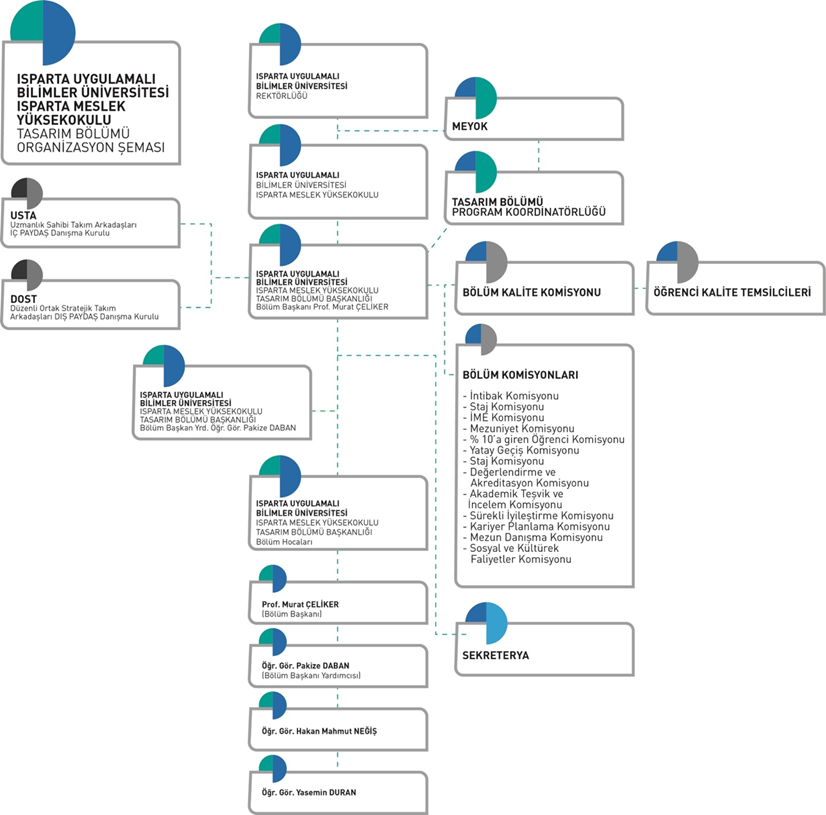
DEPARTMENT INSTRUCTORS |
|
|
|
HEAD
OF DEPARTMENT Name
and Surname: Prof.
Dr. Murat ÇELİKER email: muratceliker@isparta.edu.tr Link:
https://isparta.edu.tr/personel/01344/prof-dr-murat-celiker |
|
|
|
|
|
DEPARTMENT
VICE HEAD Name
Surname: Lecturer
Pakize DABAN Tel: +9 0 2462113060 email: pakizedaban@isparta.edu.tr Link:
https://isparta.edu.tr/personel/01686/ogretim-gorevlisi-pakize-daban |
|
|
|
|
|
Name
Surname: Lecturer
Hakan Mahmut NEĞİŞ Tel: +9 0 2462146665 Email: hakannegis@isparta.edu.tr Link:
https://isparta.edu.tr/personel/01263/ogretim-gorevlisi-hakan-mahmut-negis |
|
|
|
|
|
Name
Surname: Lecturer
Yasemin DURAN Tel: +9 0 2462146667 email: yaseminduran@isparta.edu.tr Link:
https://isparta.edu.tr/personel/01657/ogretim-gorevlisi-yasemin-duran |


